

Preparing for the six-month dismissal right
Six-month unfair dismissal rights are coming. Is your probation process ready?
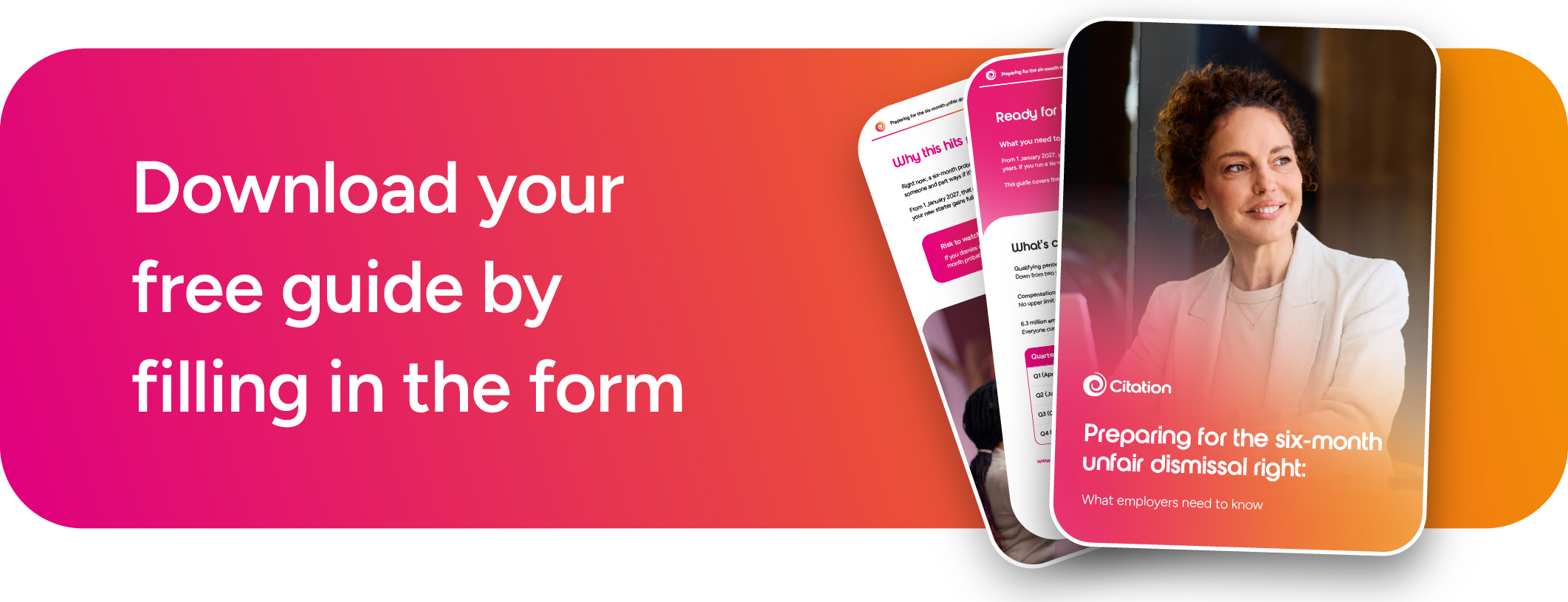
Download the free guide to probation periods and the Employment Rights Act 2025 changes
From 1 January 2027, your employees only need six months’ service to bring an ordinary unfair dismissal claim. That’s down from the current two year threshold.
If you use a six-month probation period, that’s creating a tight (and risky) turnaround time for yourself. The end of probation and the start of unfair dismissal protection lands at almost exactly the same moment.
This guide explains what’s changing, where the risks are, and what to review before the new rules arrive.
What’s changing?
You’ll have less time to assess a new starter, and less room for error if concerns surface late.
The guide to probation periods covers:
- How the new six-month qualifying period works and what it changes for you
- What removing the compensation cap could mean for your business
- Why notice periods can push employees over the six-month threshold
- The risks of leaving probation reviews until the last minute
- What happens if performance concerns and extensions aren’t documented
- Which claims employees can bring from day one, no matter what
The change applies to anyone who reaches six months’ service from January 2027. That could include the new starters you’re recruiting right now.
Your probation preparation checklist
The guide includes a checklist of the key areas to review before January 2027, including:
- Probation period lengths
- Employment contracts and short-service clauses
- Regular probation check-ins
- Performance records and documentation
- Manager training and consistency
Use it to see where your process holds up and where it needs work.
Why you’ll be able to do
This guide will help you:
- Spot where a six-month probation creates risk for your business
- Avoid common timing and notice-period mistakes
- Build an evidence trail from day one
- Give managers clearer guidance to build confidence managing performance
- Get your contracts and processes ready before the law changes
Who’s the probation periods guide for?
If you use probationary periods and make decisions about new starters, this guide is for you. It’s most useful for business owners, directors, HR managers and line managers, particularly if you don’t have a dedicated in-house HR team.
Get your probation process ready for 2027
Six months isn’t long. If your process only kicks into action towards the end, you’re left with very little time to raise concerns, document them and make the right call.
Download the guide and get your process in shape before the January 2027 deadline.
Want expert support?
Citation clients are 93% less likely to face an employment tribunal claim than the national average.
If you’d like expert eyes on your contracts, your probation process and your manager training, Citation’s HR and Employment Law team can help.
Call us now on 0345 844 1111 to find out how we can help.
Download your guide!
Already a client? Head over to Atlas for our exclusive client-only content.






Registered office address:
Kings Court, Water Lane, Wilmslow,Cheshire, United Kingdom, SK9 5AR
Copyright © 2026 Citation Ltd. Company No. 03097504